
The hospitality industry is evolving rapidly, creating increasing demand for skilled management professionals capable of handling operations, customer experiences, business growth, and global hospitality trends. As tourism, travel, luxury services, and international hospitality continue expanding, management education has become increasingly valuable for students seeking leadership positions in this industry.
MBA in Hotel Management combines business management principles with hospitality operations, preparing students for managerial roles in hotels, resorts, tourism companies, restaurants, airlines, luxury brands, and global hospitality organisations.
MBA in Hotel Management is a postgraduate management program focused on hospitality operations, hotel administration, tourism management, customer service, business strategy, and organisational leadership.
The program typically lasts:
Students learn both business management concepts and hospitality-specific skills.
The hospitality sector continues to expand globally, creating opportunities for management professionals.
Major Benefit's
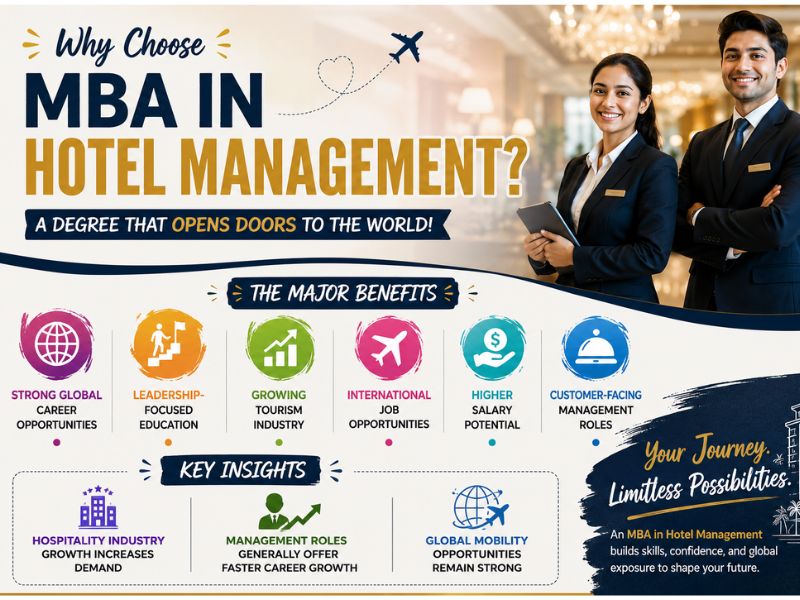
Key Insights
Students must complete a bachelor’s degree from a recognised university before applying for the MBA Hotel Management programs.
Accepted backgrounds usually include:
Many colleges accept students from any academic stream.
Minimum Marks Requirement
Most institutions generally require:
General Category:
50% or above in graduation
Reserved Categories:
Relaxation may apply according to institutional rules.
Admissions are commonly based on national-level or university-level entrance examinations.
Popular entrance exams include:
Some institutions may also provide merit-based admission or direct admission processes.
Students must complete an undergraduate education from a recognised institution before applying for MBA programs.
Many institutions consider entrance examination scores during admission.
Higher scores generally improve chances for premium institutions.
Students apply through:
Many colleges conduct:
Group Discussions (GD)
Personal Interviews (PI)
Written Assessments (if applicable)
These rounds evaluate communication skills and managerial ability.
Colleges release merit lists based on:
Selected candidates complete:
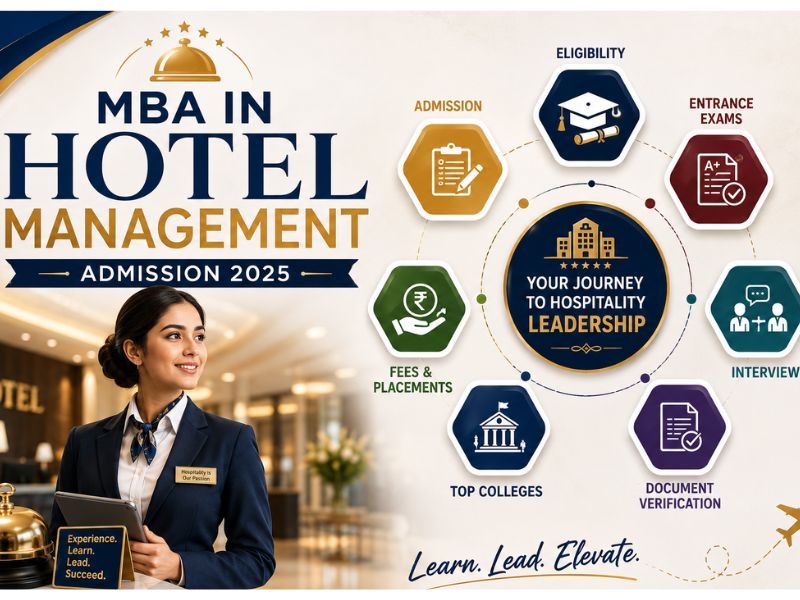
Students interested in Hotel Management MBA programs should develop:
Communication Skills
Hospitality industries require strong communication and customer interaction abilities.
Leadership Skills
Management positions require decision-making and team management abilities.
Customer Service Orientation
Service quality remains central to hospitality careers.
Problem-Solving Ability
Hotels and hospitality operations require fast decision-making and operational management.
Key Insights
Hospitality Background Is Helpful But Usually Not Mandatory
Communication Skills Strongly Influence Career Growth
Industry Exposure and Internships Improve Placement Opportunities
Entrance Scores Improve Chances for Better Colleges
Bottom Line
MBA in Hotel Management admission in 2025 generally requires graduation, entrance examinations (in many colleges), applications, interviews, and document verification. Students should compare fees, placements, industry exposure, internship opportunities, and specialisation options before selecting colleges.
Bottom Line: The The
MBA in Hotel Management syllabus focuses on building management skills, hospitality expertise, customer service abilities, and operational knowledge required for careers in hotels, tourism, restaurants, resorts, and hospitality businesses.
This institution is among the most recognised hospitality institutes offering strong practical exposure and industry-oriented hotel management education.
Approximate Fees: ₹5–15 Lakhs
Known For: Hospitality training, internships, and hotel industry exposure
IIHM is popular for hospitality education with international collaborations and practical learning approaches.
Approximate Fees: Moderate to High
Known For: Global hospitality exposure and management education
Amity provides MBA Hotel Management programs with industry-focused learning and hospitality specialisation options.
Approximate Fees: ₹5–8 Lakhs
Known For: Modern infrastructure and placement support
Christ University offers management programs with a strong focus on hospitality business, practical exposure, and corporate interaction.
Approximate Fees: ₹5–7 Lakhs
Known For: Business education and industry exposure
SRM provides hospitality-focused programs with internship opportunities and industry-oriented curriculum.
Approximate Fees: Moderate Fee Structure
Known For: Practical training and hospitality education
LPU offers management and hospitality programs with specialisation choices and placement assistance.
Approximate Fees: ₹4–8 Lakhs
Known For: Large campus infrastructure and industry interaction
Provides hospitality and management programs with practical learning opportunities and placement support.
Approximate Fees: ₹3–7 Lakhs
Known For: Industry exposure and skill development
Known for hospitality education, business programs, and practical learning approaches.
Approximate Fees: Moderate to High
Known For: Hospitality management and internships
Placement Support
Students should evaluate recruiter networks, internship support, and hotel partnerships.
Industry Exposure
Practical learning and internships significantly improve hospitality career opportunities.
ROI (Return on Investment)
Students should compare fees with placement outcomes rather than considering fees alone.
Infrastructure and Practical Labs
Hospitality education requires strong practical facilities and training environments.
Key Insights
Internships Play A Major Role In Hotel Management Careers
Industry Partnerships Improve Placement Opportunities
Practical Exposure Matters More Than Classroom Learning Alone
ROI Should Be Compared Along With Fees And Placements
Private MBA Hotel Management colleges can provide strong hospitality careers when students choose institutions with good industry exposure, practical training, internships, recruiter networks, and placement support.
BBA Hotel Management combines business administration concepts with hospitality education. Students learn management skills, customer service, hotel operations, and business fundamentals.
This course focuses on cooking techniques, kitchen management, food safety, and culinary operations. Students interested in culinary careers often choose this specialisation.
Students learn restaurant operations, service management, hospitality standards, and customer interaction skills required in hotels and restaurants.
This program teaches guest handling, reservations, reception management, and customer service operations. Front office roles remain important in the hospitality industry.
Students learn baking techniques, dessert preparation, confectionery production, and food presentation skills required in the bakery industry.
These programs focus on tourism operations, travel services, destination management, and hospitality business operations.
Students can specialise in:
Key Insights
Hotel Management Programs Focus Heavily on Practical Learning
Hospitality Industry Requires Communication and Customer Service Skills
Internships Significantly Improve Career Opportunities
Management Programs Usually Offer Higher Career Growth Potential
The most popular hotel management courses combine hospitality knowledge, practical training, management skills, and industry exposure, helping students build careers across hotels, tourism, restaurants, airlines, events, and luxury hospitality sectors.
Salary After an MBA in Hotel Management
Salary after an MBA in Hotel Management depends on multiple factors such as job role, employer, location, practical experience, skills, and industry exposure. Hospitality management graduates can find opportunities across hotels, tourism companies, luxury hospitality brands, airlines, event management companies, and international hospitality sectors.
Freshers Salary
Fresh graduates entering the hospitality and hotel management industries generally receive starting salaries depending on college reputation, internships, and job profiles.
Average Salary Range:
₹4–8 LPA
Freshers working in premium hotels, luxury hospitality brands, or international chains may receive higher salary packages.
Professionals with industry experience and management responsibilities often see significant salary growth as they move into leadership and operational roles.
Average Salary Range:
₹8–15 LPA
Mid-level professionals often work in roles such as hotel managers, operations managers, hospitality consultants, and revenue managers.
Senior hospitality professionals managing large operations, luxury hotels, or international hospitality businesses can achieve significantly higher salary packages.
Average Salary Range:
₹20 LPA+
Senior positions may include general managers, hospitality directors, regional managers, and executive leadership roles.
College Reputation
Premium institutions with stronger industry networks and placement opportunities often improve salary outcomes.
Work Experience
Experience remains one of the biggest salary growth factors because the hospitality industry highly values practical knowledge.
Skills and Certifications
Additional certifications, management skills, communication abilities, and specialised hospitality skills may increase earning potential.
International Exposure
Professionals with global hospitality experience often receive better compensation and international opportunities.
Location
Major hospitality hubs, metro cities, luxury destinations, and international markets generally provide higher salary packages.
Key Insights
Practical Experience Significantly Affects Salary Growth
Luxury Hospitality Brands Usually Offer Better Compensation
Management Roles Create Higher Salary Opportunities
International Hospitality Markets Increase Earning PotentialAn
MBA in Hotel Management can provide strong salary growth for students who combine industry exposure, internships, communication skills, management abilities, and practical experience with academic qualifications.
The hospitality industry is changing rapidly because of technology, changing customer expectations, digital transformation, and increasing focus on personalised experiences. Hotel management is becoming increasingly technology-driven, customer-focused, and innovation-oriented.
AI in Hospitality Operations
Artificial Intelligence is transforming hotel operations through automation, customer service improvements, predictive analytics, and operational efficiency. Hotels increasingly use AI-powered systems for reservations, customer support, pricing strategies, and operational management.
Smart Hotels
Smart hotels are becoming increasingly popular because they improve customer convenience and operational efficiency. Modern hotels now use smart rooms, automated check-ins, digital room controls, voice assistants, and contactless technologies to improve guest experiences.
Sustainable Tourism
Sustainability has become a major focus in the hospitality industry. Hotels increasingly adopt eco-friendly practices such as energy-efficient operations, waste reduction systems, sustainable infrastructure, and environmentally responsible tourism practices.
Digital Customer Experience
Customers increasingly expect seamless digital experiences throughout their hospitality journey. Mobile applications, digital bookings, contactless services, online customer support, and personalised digital experiences are becoming standard industry practices.
Luxury Personalization
Hospitality businesses increasingly focus on personalised customer experiences. Hotels now use customer data, preferences, and behaviour analysis to provide customised services, personalised recommendations, and premium guest experiences.
Contactless Technology
Hotels increasingly use digital payments, mobile check-ins, QR-based services, and automated systems to improve convenience and efficiency.
Data-Driven Hospitality
Hospitality companies increasingly use analytics and customer data to improve decision-making, pricing strategies, and customer satisfaction.
Experience-Based Hospitality
Modern travellers increasingly prioritise unique experiences, wellness tourism, personalised services, and lifestyle-focused hospitality.
Future Outlook
The future of hotel management is becoming increasingly technology-driven, customer-focused, and experience-oriented. Professionals who combine hospitality knowledge with digital skills, management abilities, and customer service expertise are likely to experience stronger career opportunities.
Technology Is Rapidly Transforming Hospitality Operations
Customer Experience Is Becoming The Biggest Competitive Factor
Sustainability Continues Growing Across Hospitality Industries
Digital Skills Are Increasingly Important For Hospitality Careers
Hotel management in 2026 is evolving beyond traditional hospitality operations toward technology integration, smart services, personalised experiences, and sustainable business practices, creating new career opportunities for future hospitality professionals.
The future scope of MBA in Hotel Management continues to expand because the hospitality industry is growing rapidly across tourism, hotels, luxury services, travel technology, and customer experience sectors. Modern hospitality management increasingly combines business skills, technology, and customer-focused operations, creating strong long-term career opportunities.
Luxury Hospitality
Luxury hospitality remains one of the fastest-growing segments within the hospitality industry. Premium hotels, luxury resorts, high-end restaurants, and personalised hospitality services continue to create management opportunities for skilled professionals.
Professionals may work in:
Luxury hotels
Premium resorts
High-end hospitality brands
VIP customer services
International Tourism
Global tourism continues to expand as travel demand increases across business, leisure, and international markets. Hotel management graduates increasingly find opportunities in international hospitality companies, tourism organisations, and global hotel chains.
Growing tourism creates demand for:
Tourism managers
International hotel professionals
Travel operations managers
Destination management specialists
Travel Technology
Technology is transforming the hospitality and travel industries rapidly. Travel technology companies increasingly require professionals who understand hospitality operations and digital systems.
Emerging opportunities include:
Hospitality technology management
Online travel platforms
Digital booking systems
Customer experience platforms
Resort Management
Resort management continues growing because of increasing demand for wellness tourism, vacation destinations, luxury experiences, and leisure travel.
Professionals may work in:
Beach resorts
Wellness resorts
Adventure tourism
International hospitality chains
Hospitality Consulting
Hospitality consulting creates opportunities for professionals interested in business strategy, operational improvements, customer experience management, and business expansion.
Consulting professionals may work with:
Hotels
Restaurants
Tourism companies
Hospitality startups
Additional Growth Areas
Event Management
Corporate events, weddings, exhibitions, and hospitality events continue expanding rapidly.
Airlines and Cruise Industries
Hospitality professionals increasingly work in aviation services and cruise management.
Entrepreneurship Opportunities
Many graduates start businesses such as restaurants, cafes, travel companies, hospitality startups, and event companies.
Key Insights
Technology Is Expanding Hospitality Career Opportunities
Luxury Hospitality Continues Growing Rapidly
International Tourism Creates Global Career Opportunities
Customer Experience Skills Are Becoming Increasingly Valuable
Future Outlook
Hospitality management is becoming increasingly technology-driven, customer-focused, and globally connected. Students who combine management knowledge, hospitality expertise, communication skills, and digital capabilities are likely to experience stronger career growth.
MBA in Hotel Management offers strong future potential because of growth across luxury hospitality, tourism, travel technology, resorts, consulting, and international hospitality markets, making it a promising management specialisation for long-term career growth. Future Scope of MBA in Hotel Management
The future scope of MBA in Hotel Management continues to expand because the hospitality industry is growing rapidly across tourism, hotels, luxury services, travel technology, and customer experience sectors. Modern hospitality management increasingly combines business skills, technology, and customer-focused operations, creating strong long-term career opportunities.
Luxury Hospitality
Luxury hospitality remains one of the fastest-growing segments within the hospitality industry. Premium hotels, luxury resorts, high-end restaurants, and personalised hospitality services continue to create management opportunities for skilled professionals.
Professionals may work in:
Luxury hotels
Premium resorts
High-end hospitality brands
VIP customer services
International hospitality chains
Hospitality Consulting
Hospitality consulting creates opportunities for professionals interested in business strategy, operational improvements, customer experience management, and business expansion.
Consulting professionals may work with:
Hotels
Restaurants
Tourism companies
Hospitality startups
Additional Growth Areas
Event Management
Corporate events, weddings, exhibitions, and hospitality events continue expanding rapidly.
Airlines and Cruise Industries
Hospitality professionals increasingly work in aviation services and cruise management.
Entrepreneurship Opportunities
Many graduates start businesses such as restaurants, cafes, travel companies, hospitality startups, and event companies.
Key Insights
Technology Is Expanding Hospitality Career Opportunities
Luxury Hospitality Continues Growing Rapidly
International Tourism Creates Global Career Opportunities
Customer Experience Skills Are Becoming Increasingly Valuable
Future Outlook
Hospitality management is becoming increasingly technology-driven, customer-focused, and globally connected. Students who combine management knowledge, hospitality expertise, communication skills, and digital capabilities are likely to experience stronger career growth.
MBA in Hotel Management offers strong future potential because of growth across luxury hospitality, tourism, travel technology, resorts, consulting, and international hospitality markets, making it a promising management specialisation for long-term career growth.
MBA in Hotel Management offers students opportunities to build careers across hospitality, tourism, luxury services, travel management, and international business environments. The program combines business management skills with hospitality expertise, creating multiple career opportunities across growing industries.
Leadership Opportunities
One of the major advantages of pursuing an MBA in Hotel Management is the opportunity to develop leadership and management skills. Students learn business operations, team management, decision-making, and customer relationship management, preparing them for managerial and leadership positions within hospitality organisations.
Global Career Options
Hospitality is a global industry, creating career opportunities across multiple countries and international markets. MBA graduates can explore opportunities in hotels, resorts, airlines, tourism companies, and multinational hospitality organisations worldwide.
Hospitality Sector Growth
The hospitality sector continues to expand because of increasing tourism, business travel, luxury experiences, and customer-focused services. This growth creates consistent demand for skilled management professionals who can manage hospitality operations efficiently.
Networking Opportunities
Hospitality industries rely heavily on professional relationships and industry connections. MBA programs provide networking opportunities through internships, industry interactions, workshops, alumni networks, and corporate collaborations that can improve career growth.
International Mobility
Hotel management professionals often have greater international mobility because hospitality skills are transferable across countries and global organisations. International hotel chains, tourism companies, and hospitality brands create opportunities for global careers.
Additional Benefits
Diverse Career Opportunities
Graduates can work across multiple industries, including hotels, tourism, airlines, restaurants, events, consulting, and luxury hospitality sectors.
Strong Practical Learning
Most MBA Hotel Management programs include internships, industrial exposure, practical training, and live projects that improve employability.
Customer Service and Communication Skills
Students develop communication, leadership, customer management, and interpersonal skills that remain valuable across multiple industries.
Hospitality Careers Offer Strong International Opportunities
Management Skills Improve Long-Term Career Growth
Industry Networking Significantly Affects Career Opportunities
Hospitality Growth Continues,s Creating New Management Roles
MBA in Hotel Management provides advantages through leadership development, global career opportunities, industry growth, networking benefits, and international mobility, making it an attractive option for students interested in hospitality and management careers.
MBA in Hotel Management offers students opportunities to build careers in one of the world’s fastest-growing service industries. With growing tourism, luxury services, and international hospitality expansion, management professionals continue finding new opportunities across global markets.
Q1. Is Ian's Hotel Management worth it?
Yes, especially for students interested in hospitality leadership roles.
Q2. What is the average salary?
Typically ₹4–8 LPA for freshers.
Q3. Can non-hotel students pursue an MBA?
Yes, many institutions allow graduates from different backgrounds.
Q4. Is an international career possible?
Yes, hospitality offers strong global opportunities.
Q5. What skills are important?
Communication, leadership, customer service, and management skills.